
Finding Portland Residents
Start with the record tied to the question. An address can be mapped in PortlandMaps, checked against the county property account, and then matched to a recorded document. A name from an old address usually belongs first in a Portland city directory, not a current property search. A name with a court or probate connection belongs in the Oregon Judicial Department system. Each source has its own date and purpose. The strongest result is a match across separate records, such as a legal description in an account and deed, or a directory-year address and a dated newspaper notice.
Portland has no current household roster. Property records identify an assessed owner or correspondence address, recorded documents identify transaction parties, and historical directories identify a person or business in a particular edition. Those labels matter. They should not be turned into a claim that every person at an address is publicly listed.
- Enter the address in PortlandMaps, or search an intersection when an exact address misses, then identify the mapped property.
- For a Multnomah County parcel, check the property account and save the Property ID, situs address, tax year, owner label, and legal description.
- Use the owner or legal-description detail in the recorded-document index, then record party roles, document number, type, and recording date.
- For a past household, use the library’s reverse directory section for the relevant year and read the matching alphabetical entry.
- When the online trail stops, use the named custodian’s counter, archives, or focused public-records request rather than guessing from a nonmatch.
Note: Portland reaches into three counties, so confirm the tax county before treating a Multnomah result or nonresult as conclusive.
Portland Resident Records Offices
Most address-led research passes through Multnomah County’s Division of Assessment, Recording & Taxation, known as DART. Its assessment side keeps the account data used by MultCoPropTax; its recording side routes document research through MultCoRecords and the lobby computers. The City of Portland provides the GIS and permit-facing entry point. Elections, court files, vital records, library collections, and Archives each have different custodians. The Portland street directory has the full address chain after a property is identified.
DART’s property/marriage counter is at 501 SE Hawthorne Blvd., Suite 175, Portland, OR 97214. Published hours are Monday through Friday, 8:30 a.m. to 4:30 p.m. Property-tax and ownership assistance is available at 503-988-2225. The court clerk, not County Records and Archives, keeps Multnomah Circuit Court files. That division of responsibility prevents a common dead end.
Multnomah DART Recording
501 SE Hawthorne Blvd., Suite 175
Portland, OR 97214
503-988-2225
DART Assessment & Taxation
501 SE Hawthorne Blvd., Suite 175
Portland, OR 97214
503-988-2225
PortlandMaps and County Accounts
PortlandMaps is the practical first stop for an address. The city viewer accepts an address or intersection and can bring together property, district, zoning, permit, infrastructure, and map information. Its help material suggests dropping the street suffix when an exact search fails. For a condominium, the Related Accounts bar can lead to a particular unit. PortlandMaps supplies geographic context, but the county account is the appropriate source for assessed ownership and tax data.
MultCoPropTax’s guest search illustrates the account search available without a password. It accepts an address or Property ID, while its advanced search can narrow by owner name, street range, city, ZIP Code, neighborhood, property type, tax year, and legal-description elements. A result set beyond 10,000 rows needs more narrowing. These controls are for parcel research, not a broad public directory.
| MultCoPropTax field | How it is used |
|---|---|
| Situs Address | Finds the physical taxed parcel. |
| Property ID / alternate account | Connects an account to county records. |
| Legal Description | Provides a stronger historic deed-chain match than a street number. |
| City and ZIP Code | Narrows a property search geographically. |
| Owner Name | Searches the assessed-owner field, not every occupant. |
The property-search screen below shows the county route from an address to its account. Save field labels exactly as displayed when comparing later records.
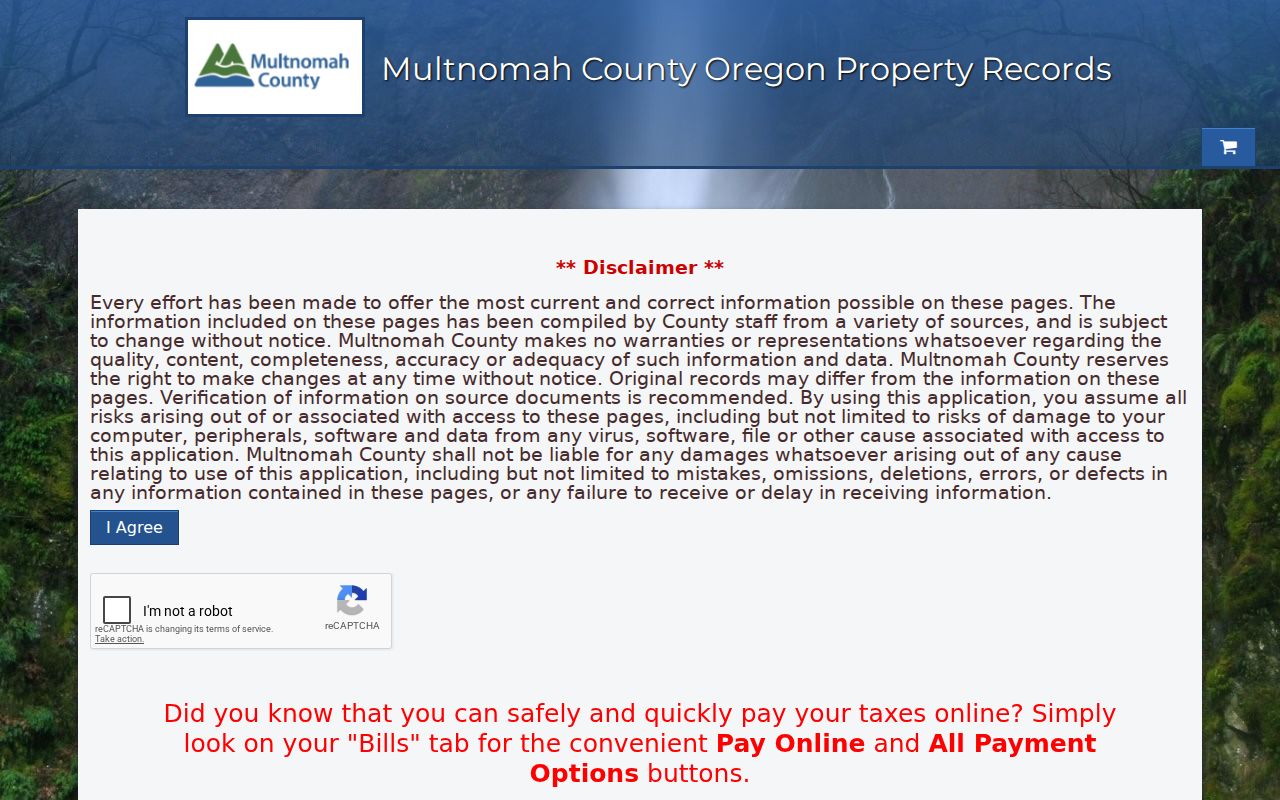
Once the account is identified, the legal description and record labels make a more reliable bridge to DART’s recording index than a street number alone.
Portland Owner Labels Matter
An assessed owner, a tax mailing address, and a parcel’s situs address are three different facts. Situs means the physical location of the taxed real property. A mailing address is where the tax bill is sent and can be an agent, business, trust, or owner elsewhere. A recorded deed names parties in a transaction. None of those labels alone establishes every person at the property.
That distinction is especially useful in Portland, where a city address may be in Multnomah, Clackamas, or Washington County. Begin with map context, then identify the county and use its legal record system. For a deed trail, match the legal description, party role, recording date, and document number. The record trail becomes more dependable when two independent sources agree.
- Parcel
- A defined piece of real property carried in an assessment account.
- Situs address
- The physical address associated with the taxed parcel.
- Index
- A searchable list pointing to records, rather than the record image itself.
- Criss-cross directory
- An address-arranged directory section that leads from a street location to a listed person or business.
Note: Preserve the source’s field names, especially owner, party, and mailing address, so later comparisons do not overstate the evidence.
Current Portland Resident Sources
Portland residents directory research relies on several narrow sources rather than one live roll. A property account can orient an assessed-owner question. A recording index identifies direct and indirect parties to a filing. Oregon My Vote is deliberately a voter’s own-registration service. Multnomah Elections handles a lawful public-records request for broader voter material. Court registers, business filings, and licenses can verify a public role or affiliation when that is the precise question.
Use the source that fits the event. A person in a historic city directory may be linked to an address and sometimes a business or occupation in that year. A Secretary of State result identifies an active entity and its associated names or agent information. A court docket identifies a party, case, and date where public. Combining those records creates a careful Portland resident search without treating any one source as a master list.
| Portland source | What it confirms | Custodian | Access route |
|---|---|---|---|
| Property account | Assessed ownership, parcel, value, and tax fields | Multnomah DART | Guest address or Property-ID search |
| Recorded documents | Document parties, type, date, and legal description | DART Recording | MultCoRecords, counter, order, or microform |
| Voter records | Election-administration data when lawfully available | Multnomah Elections | Own-record portal or written request |
| Court register | Public case identity, parties, and events | Oregon Judicial Department | Free portal, OJCIN, or filing court |
| City directory | Historic annual address and name clues | Multnomah County Library | Library local-history collection |
A name-first verification sequence is detailed in the Portland resident lookup. For a past household, treat a directory listing as an edition-year clue and compare it with a dated record from the proper custodian.
Portland Voter Records Route
Oregon My Vote lets an elector view their own registration information. It is not a browse-by-name or browse-by-street directory. Multnomah County Elections is the authentic route for a broader authorized voter-record request. The County Public Records Center asks the requester to create an account with a valid email, choose All Other Departments and then Elections, and describe the records specifically.
County materials state a five-business-day response window and a cost estimate before production when a fee applies. Listed voter-file pricing is $25 to set up a list plus $0.025 per 100 records, with a $5 minimum and $500 maximum order fee. A requested list may include lawful participation-history information, not ballot selections. Archived cancelled registrations begin in 1908 and run through 2006, but signatures cannot be copied.
The Oregon My Vote service is shown below as an individual registration route. Use the Elections request channel for records outside that personal service, and respect protected-record and use limits.
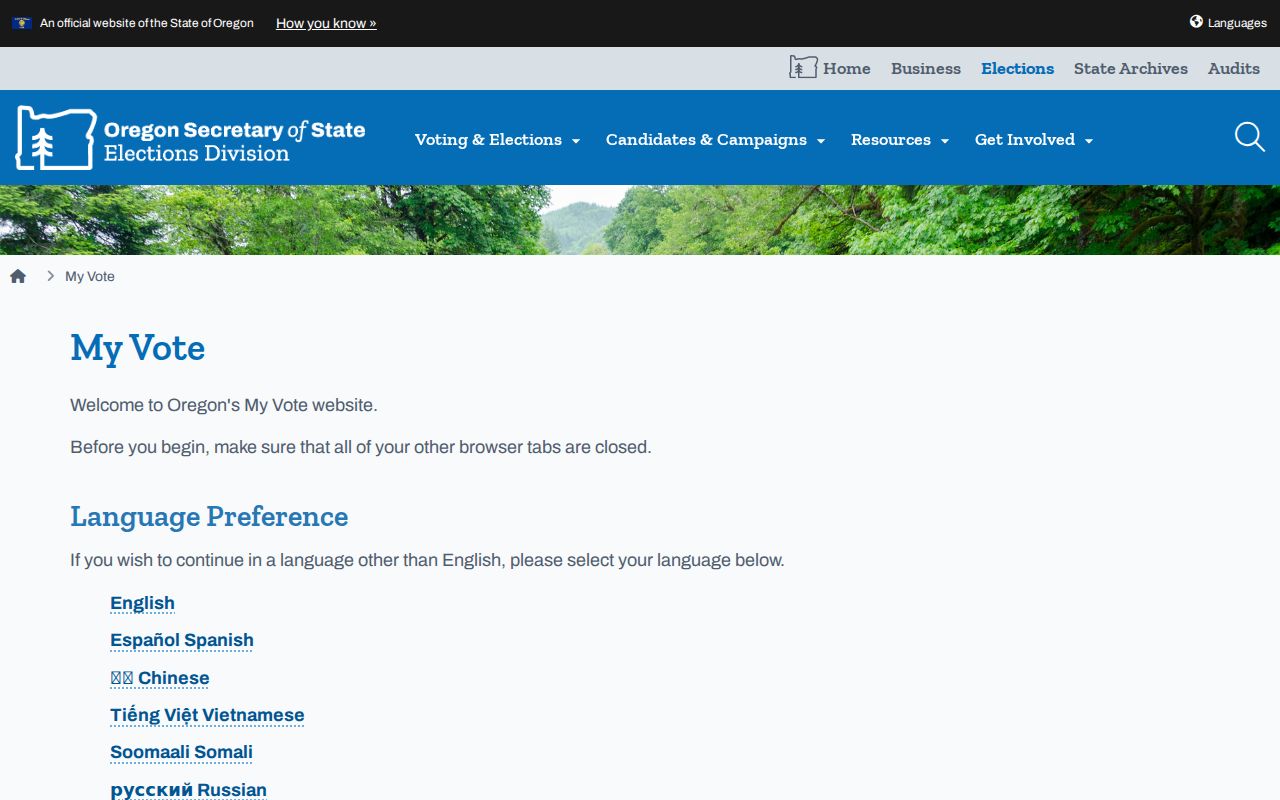
Voter information is best used as custodian-controlled verification, not as an invitation to contact people associated with an address.
Portland Court Record Checks
The free Oregon Judicial Department Records and Calendar Search can locate eligible public cases and calendars. OJCIN Online is the paid statewide route for circuit-court, Tax Court, and appellate registers. A public result can orient a search with a case number, court, party role, filing date, case type, and displayed event or outcome. The official file remains with the court where it was filed.
Use a full legal name with court or date context, then ask the clerk for a specific document if it is public and needed. Multnomah County Circuit Court has its own records-counter form for targeted copy requests. Confidential, sealed, juvenile, adoption, and protected matters do not become available merely because a name search exists. Federal matters belong in PACER and are a different jurisdiction from Circuit Court.
PACER is the official federal-court route for a District of Oregon docket. Registration and per-page charges under PACER’s rules can apply.
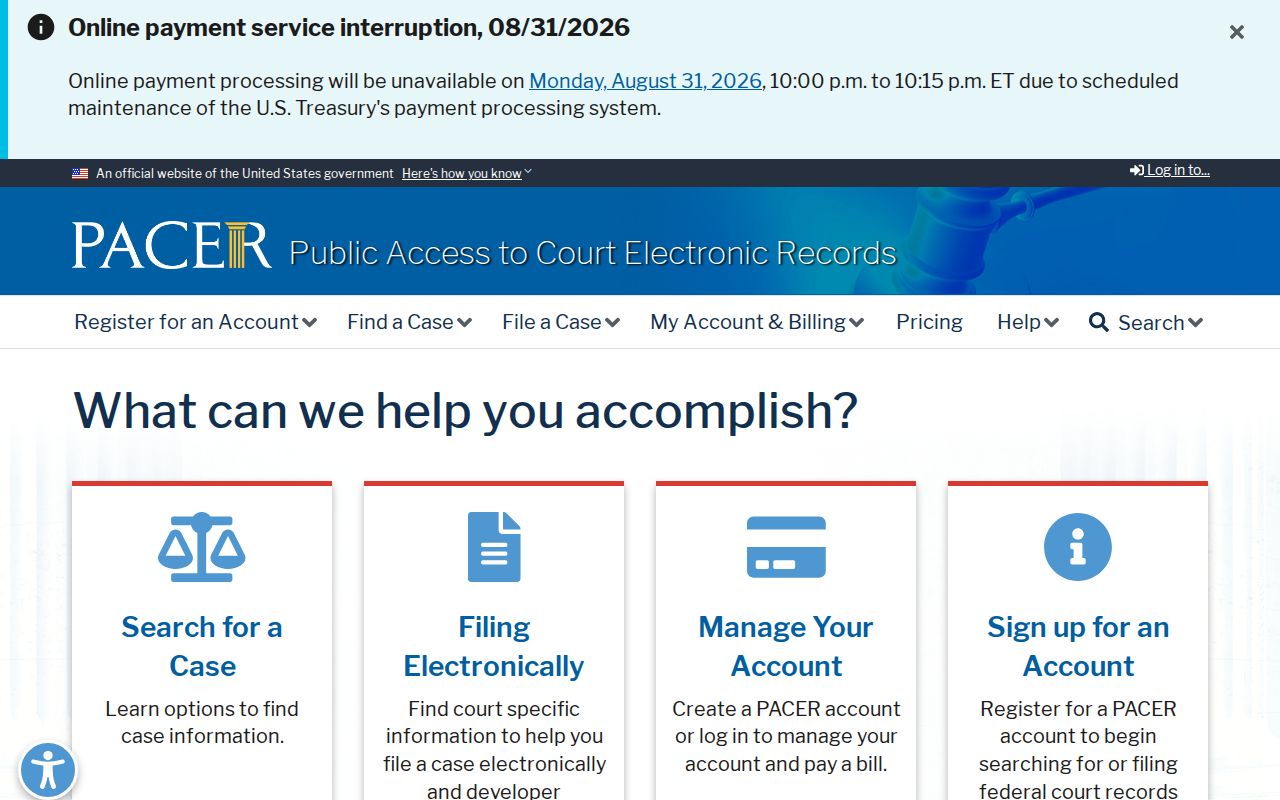
Keep the court name, case number, filing date, and party role with any result so a similar name is not mistaken for the same person.
Portland Business Record Clues
The Oregon Secretary of State Business Registry is useful for an active entity or public affiliation, not for a person’s location. Its basic search accepts a business name or Business Registry Number. Active results can show registry number, business name, entity type, registry date, registered-agent name and address, business mailing address, and associated names. Inactive records require a call or copy request.
The registered agent and business mailing fields belong to the entity record. They should be quoted as such. For an occupation that requires a state credential, the appropriate Oregon board or the Department of Consumer and Business Services search can verify the credential’s published status. Portland’s Revenue Office has its own public-records route for local business-license records, while financial details are confidential.
Oregon’s business-search form below shows the official active-record route. It helps distinguish an entity lead from a personal residence claim.
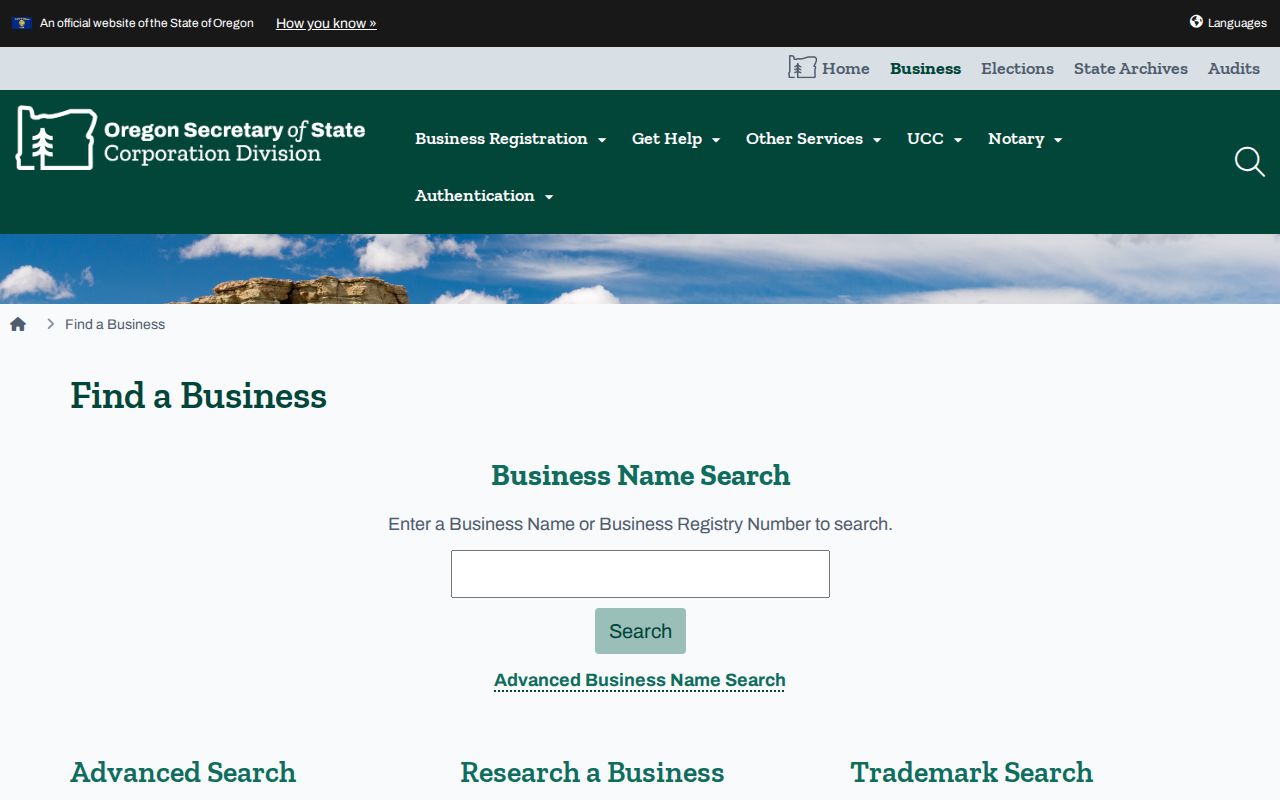
A business result is strongest when it is corroborated by a dated deed, court record, directory edition, or other source that answers the same question.
Historic Portland Resident Directories
Multnomah County Library is Portland’s key local household-history source. The first Portland city directory was published by S. J. McCormick in 1863. Volumes commonly include alphabetical residents and businesses, classified businesses, and government or organization sections. Beginning in 1930, each Portland directory includes a reverse Street and Avenue Guide arranged by address. That allows a reader to find a street, block, and address, then turn to the alphabetical section for added context.
Before 1930, Portland directories do not have the address-arranged section. Use a person’s name, a later directory, a permit, or a newspaper lead to begin the earlier search. The Portland Directory Book explains how to read the local collection and trace a household year by year. A directory entry is a dated clue, not proof of an uninterrupted presence.
Note: Central Library staff and the library’s house-history guides can help separate an annual directory clue from a county ownership record.
Portland’s 1933 Address Repair
Historic address research in Portland needs a special check. Five-person crews began a citywide readdressing project in 1931 and completed it in July 1933. Nearly every building received a new number and directional, and many streets changed names. The Crane Directory of Street and Name Changes, available at Central Library and as a City Archives eFiles digital copy, works in both directions between older and newer forms.
For 1930 and 1931, look under the old address. For 1932 and 1933, check both forms because the change did not arrive everywhere at once. Some neighborhoods now within Portland were outside city limits when built, so a historic search may require a rural or Gresham resource. The crosswalk is a local repair tool that prevents an old address from looking like a missing record.
Portland Recording Access Eras
MultCoRecords makes recorded documents from February 2002 forward searchable online. The county says the lobby’s electronic recorded indices reach 1965, while microform carries the trail farther back. County Archives research is available by appointment, normally without a viewing charge, though assistance or copies can cost. The oldest deed book noted by the county covers 1849 through 1854, when parts of the area were still administered through Washington County.
In a chain of title, begin with the current deed and legal description. A grantor is the party conveying an interest; a grantee is the party receiving it. Search the seller from a later deed as the earlier grantee, checking the legal description at each step. Estates, trusts, corrections, and boundary changes can appear in a chain, so a transfer is not automatically a sale.
Multnomah’s recording guide describes the online and counter distinction. Its Property Recording Alert Service sends same-day email when an indexed document matches monitored information, but the County says the alert neither prevents nor guarantees against fraud.
Portland Vital Record Clock
Oregon Health Authority manages current certificates, while Oregon State Archives is the historical route after the confidentiality period opens. Birth records are restricted for 100 years. Death, marriage, domestic-partnership, and divorce or dissolution records are restricted for 50 years. The Archives calendar-year schedule had opened births through 1925 and the other listed vital events through 1975 at the beginning of 2026.
For a restricted certificate, eligibility and identification requirements apply. OHA offers online, phone, mail, drop-box, and appointment channels, with a $25 base search and first-certificate charge by mail or drop box. A Multnomah marriage record is also available through DART after the completed license returns; the county lists $7.75 for a first certified copy and $4 for additional copies ordered at the same time.
Oregon State Archives’ vital-record guide below directs older research to the appropriate historical channel.
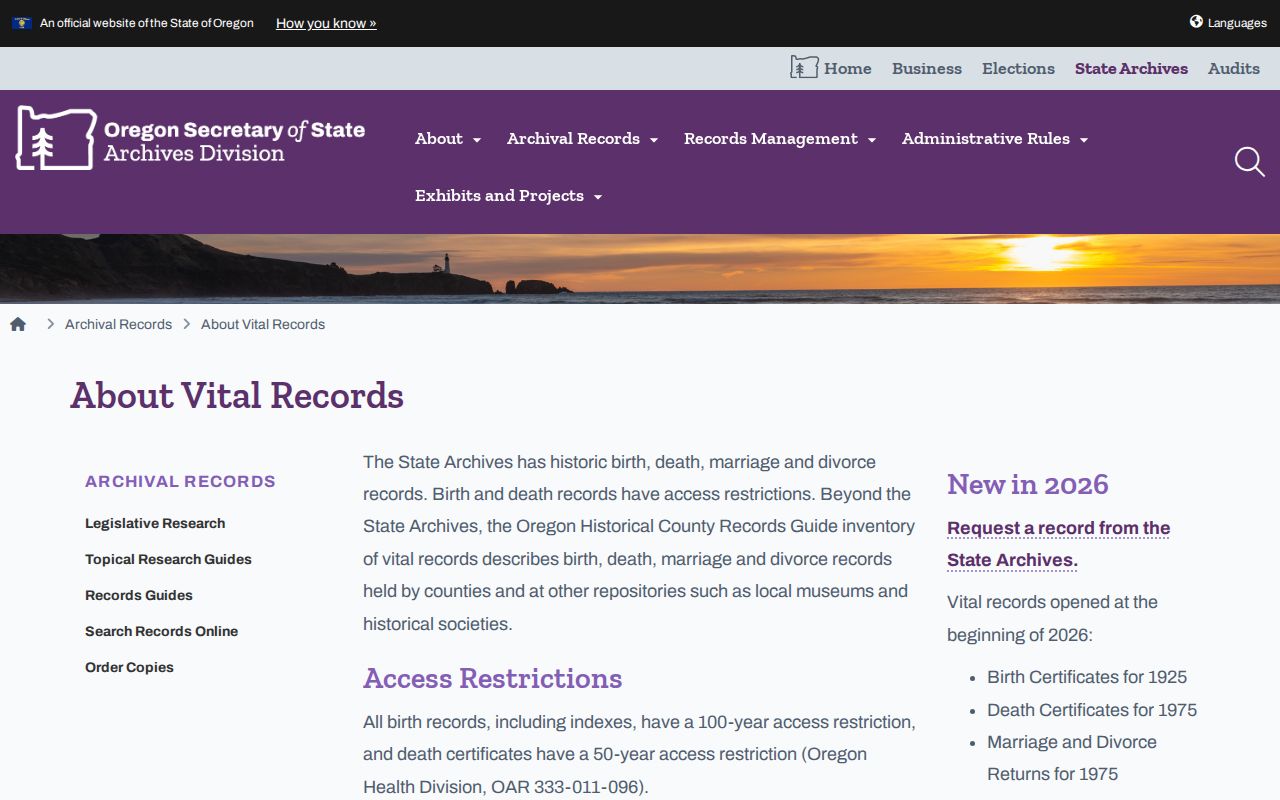
Ask for the exact record type and period needed, rather than assuming a current certificate and an open historical return follow the same rules.
Portland Public Records Help
Oregon Public Records Law, chiefly ORS 192.311 through 192.478, gives every person the right to inspect nonexempt records under ORS 192.420. A focused request identifies the record, date range, custodial agency, and preferred format. It does not ask an agency to build a broad new list. Under ORS 192.324, a public body generally acknowledges, completes, or supplies a written estimate within five business days, then completes or gives an estimate within an additional ten business days.
Actual costs for locating, reviewing, redacting, copying, certifying, and delivering can be charged. Ask for a cost estimate and fee ceiling before work starts. The Oregon Public Records Advocate offers information and facilitated dispute resolution under ORS 192.461. City records not already online can be routed through Portland’s public-records system and its Legal Records Team.
The Oregon Public Records Advocate page below is a useful escalation route when a request needs neutral process help.
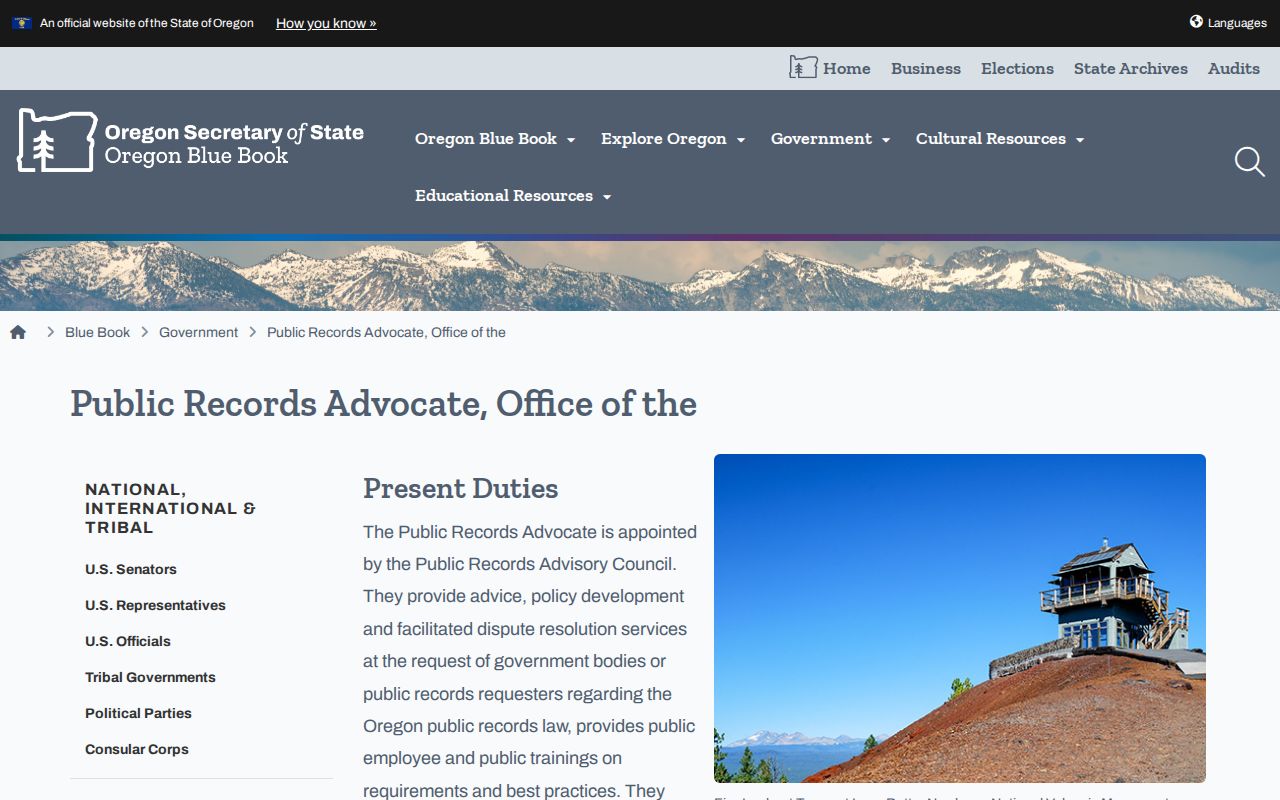
Use a request to obtain a defined record from its custodian, and stop when redactions or statutory confidentiality limits apply.
Portland Specialized Official Searches
Some official systems answer limited status questions that do not belong in an ordinary residents directory search. The Oregon Department of Corrections offers its public offender search, and the Multnomah Sheriff’s custody information is a county-status route. A result or nonresult must be read within that system’s scope. It is not a complete criminal history, a determination about a person, or proof of a current address.
Oregon also maintains licensing searches through DFR and profession-specific boards. Those records can verify a public credential or disciplinary status where published, but they do not establish a personal residence. Use the visible limitation and the source’s own labels. A state record might be updated periodically or subject to a separate request process.
Oregon DOC’s offender-search entry is shown below. Follow its result limitations and use notices before relying on any returned status.
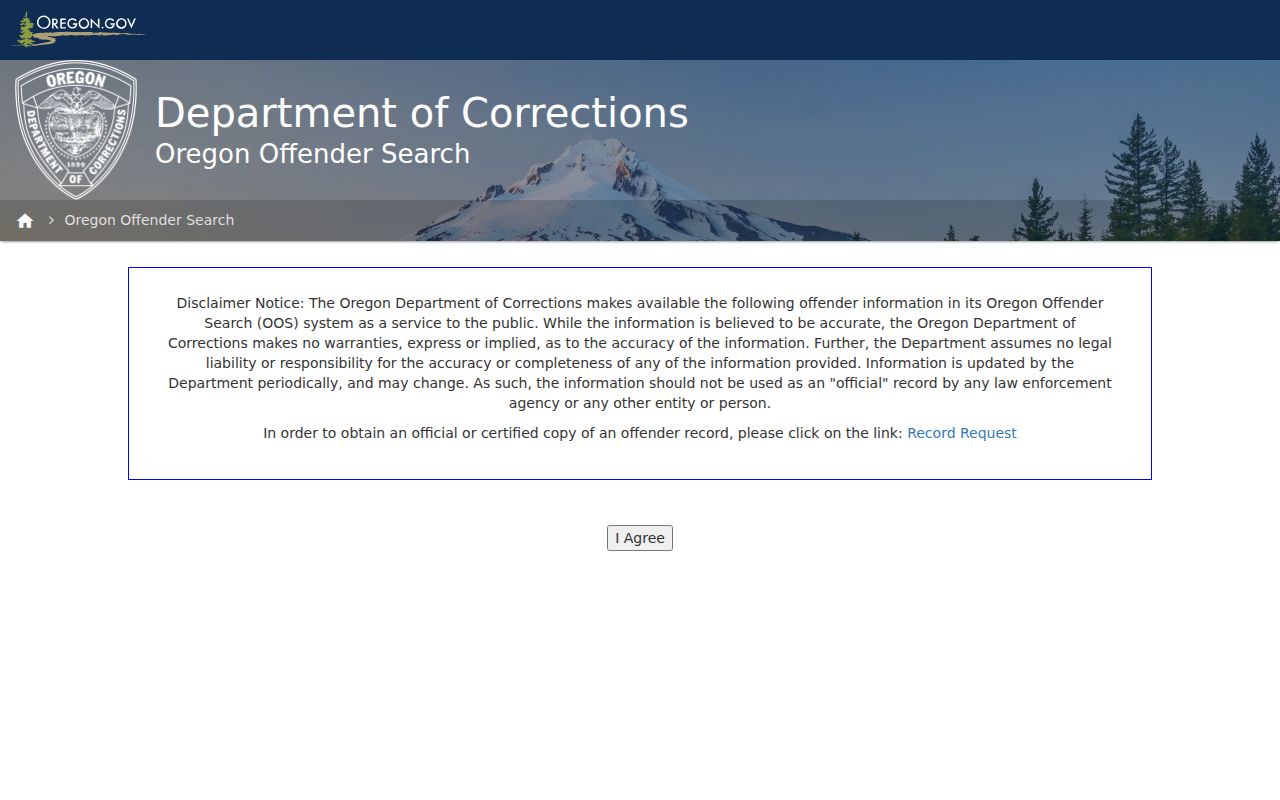
The official locator is narrowly scoped, so a record from it should remain separate from property, directory, and court evidence.
Oregon’s license-verification route directs a researcher to the appropriate profession or business record. A credential record can confirm a public affiliation, but an address field in an entity or credential system needs the same careful labeling as any other record.
Portland Residents Across Counties
Portland is Multnomah County’s seat, but the incorporated city also reaches into Clackamas and Washington Counties. A city mailing label or ZIP Code is not proof of which county holds the assessment or recording record. USPS ZIP Codes route delivery. They are not municipal boundaries, neighborhoods, tax jurisdictions, or voter precincts. Use the complete address in the USPS tool, then use PortlandMaps and the county account for government geography.
This boundary check is also useful for an old address. Historical annexation can put a building outside Portland in the year a directory or permit was created. The correct trail may be a different county office, a Gresham publication, or a historic record group. Start locally, verify the era and jurisdiction, and then continue with the record keeper that actually had authority.
Lawful personal research. Use Portland records for family history, estate questions, civic transparency, or personal safety. Do not use records to stalk, harass, intimidate, or harm anyone, and never infer a protected residence from a substitute mailing address.