
Portland City Directory Holdings
Multnomah County Library identifies its Portland city-directory sequence as beginning in 1863, when S. J. McCormick published the first volume. The directories are a historic, edition-by-edition record rather than a current roster. A usual volume combines alphabetical residents and businesses, a classified business section, and government or organization material. The library's house-history service is the central place to begin a Portland city directory search because it pairs the volumes with address guidance and staff research help.
| Collection or tool | Coverage | Where held | Best access |
|---|---|---|---|
| Portland city directories | 1863 onward in the library sequence | Multnomah County Library, Central Library local-history service | Start with the library's house-history guidance. |
| Street and Avenue Guide | 1930 and later | Portland city-directory volumes | Use the address-arranged reverse section. |
| Crane Directory of Street and Name Changes | 1931 to 1933 changeover | Central Library and City Archives eFiles | Crosswalk old and new address forms. |
| Historic Oregonian and Oregon Journal | 1861 to 1987; 1902 to 1982 | Library databases | Search quoted addresses and related notices. |
Not every question begins at the same shelf. A post-1930 address can lead into a reverse listing, while a pre-1930 address normally needs a name-first route. A newspaper or permit clue may supply that name. The library also cautions that a building now in Portland could have been outside city limits when it was built, so a Portland volume may not be the right first source for every era.
Portland City Directories Since 1863
The 1863 starting point matters because it gives a long annual trail between decennial census releases. A city directory is still selective. It commonly names household heads, which can include married men, widowed women, and single people, but it does not promise every person at an address. Adult children or other people at the same address may appear only in separate alphabetical entries. Read each listing as a dated documentary clue, then seek a second record before drawing a family conclusion.
The Multnomah County Library house-history starting guide is the right source to open beside a first volume. It explains how the collections support house history rather than offering a modern people list.
That library route helps keep an edition year, address form, and name connected while the Portland city directory trail is being built.
Reading a Portland City Directory Entry
A reverse entry is usually the first stop for a later address. Find the street, then the block and number, and copy the abbreviated person or business name exactly as printed. Move next to the alphabetical entry. That second entry may add a home address, a trade or business notation, a business name, a spouse's first name in parentheses, or a widow notation using a deceased spouse's name. The printed key and page conventions can change, so the volume's own abbreviations should be checked before a notation is expanded.
| Reverse listing | Street, block or address, and an abbreviated resident or business name. |
|---|---|
| Alphabetical listing | Individual name and home address, sometimes with a trade, business, or other identifying note. |
| Parentheses | A spouse's first name may appear after a married person; a widow entry can include a deceased spouse's name. |
| Classified section | Business categories that can provide a second lead for a named enterprise. |
- Street and Avenue Guide
- The reverse, address-arranged part of Portland directories from 1930 forward. In many years it is printed on pink or green paper.
- Alphabetical entry
- The name-arranged listing used to expand an abbreviated reverse-entry clue.
- Abbreviation key
- The volume's explanation of its own short forms. Check it before treating a mark as a relationship or address fact.
Portland City Directory Street Guides
Beginning in 1930, Portland directories contain the reverse Street and Avenue Guide. In most years, its pink or green paper makes it easy to spot within the book. The sequence is practical: locate the street, narrow to the block, then find the address and take the abbreviated name back to the alphabetical section. That two-step read can reveal more than an address alone, but it remains an annual listing and not proof of title or of a person's presence throughout the year.
The library's Dig deeper house-history guide places those volume clues beside newspaper and permit research.
Use the guide to keep the reverse listing and the alphabetic listing in the same year before comparing the next Portland city directory.
Portland City Directories Before 1930
The earlier Portland city-directory run requires a different method. Directories from 1863 through 1929 do not contain address sections, so an address cannot be searched directly in those books. Start with a person identified in the 1930 reverse guide, a plumbing or sewer permit, a historic newspaper item, or a later source. Then work backward through alphabetical volumes, recording each spelling, street form, and year. This slower name-first method is more reliable than forcing an early house number into an index that never arranged entries by address.
Historic boundaries deserve the same care. Woodlawn, Parkrose, Brooklyn, Woodstock, and other areas developed in different municipal settings. If the building predates its inclusion in Portland, try a rural or Gresham source and check municipal-history material before calling a missing Portland entry a dead end.
Note: A city directory records what that edition chose to print, so a gap can reflect the source's scope as well as a move or name change.
Portland City Directory Address Crosswalk
Portland's 1931 to July 1933 readdressing project changed nearly every building number and directional, and it changed many street names. The result established the familiar NW, N, NE, SW, and SE address quadrants. A directory search can fail quietly if it uses only a current number. The Crane Directory of Street and Name Changes is a 243-page cross-reference that works in both directions between the historic and current forms.
For 1930 to 1931, look under the old address. For 1932 to 1933, search both forms because the change did not reach every neighborhood at the same time. The Portland City Archives also provides a research route for municipal maps, plans, photographs, and eFiles discovery.
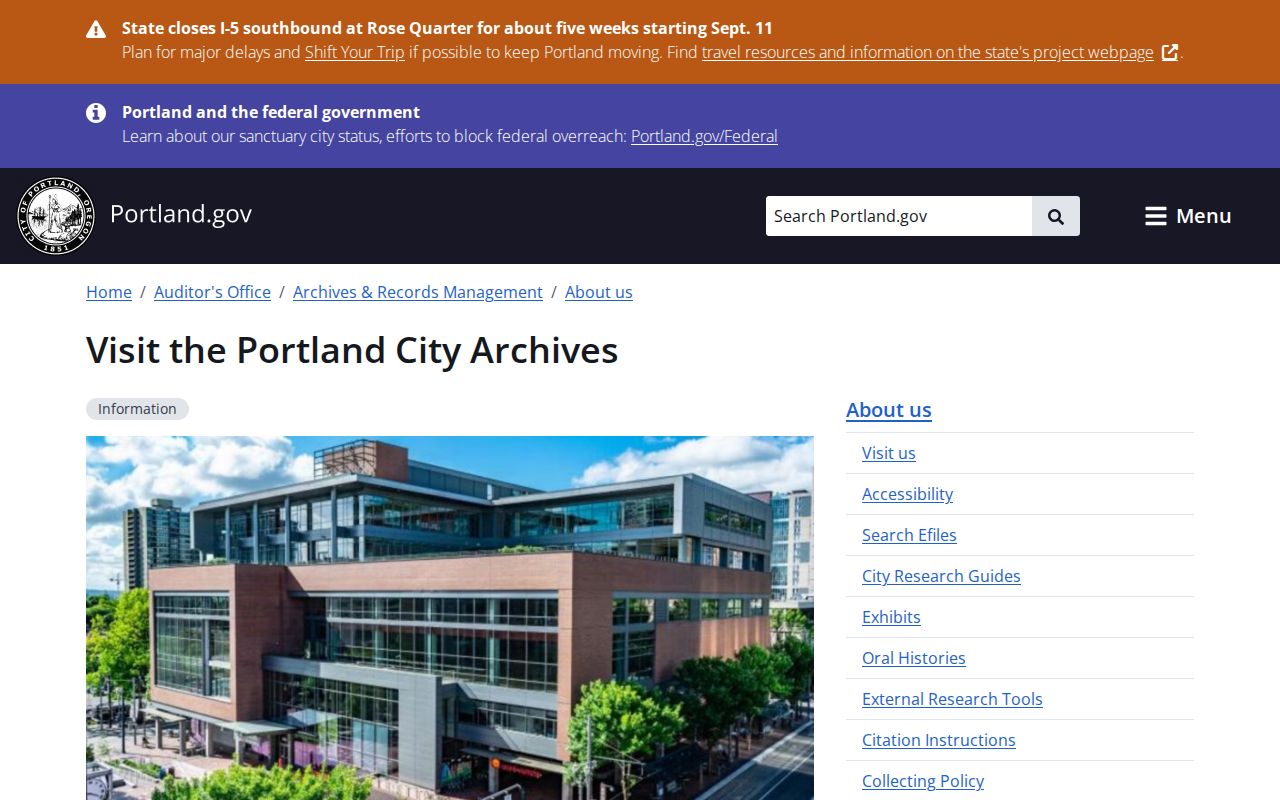
The archives image is a reminder to save both address forms, the edition year, and the crosswalk result with any Portland city directory notes.
Trace Portland City Directories Across Years
Use a sequence of directory years to test a family-history question. Start with one verified name or a later address, then copy the entry without normalizing the spelling. If the person appears in the reverse guide, read the alphabetical entry too. Pair annual volume clues with a federal census once the applicable 72-year release period has passed, and use a newspaper date run to explain a move, an obituary, a sale, or a community reference. The historical collections are a better fit than a current resident search when the question is about a past household.
- Establish the historic city boundary and convert the address with the Crane crosswalk when the date calls for it.
- Locate the person in a directory year, or use the 1930 and later reverse guide to obtain a name from an address.
- Read the alphabetical entry and preserve its spelling, street form, and any business or relationship notation.
- Repeat the check in surrounding years, then compare the pattern with an available census release.
- Use the Oregonian, Oregon Journal, deeds, probate material, or permits only where the dates and place match the directory clue.
The Oregon Historical Society Research Library adds a free-admission Oregon-focused collection, digital materials, catalog access, Archives West, and research guides.
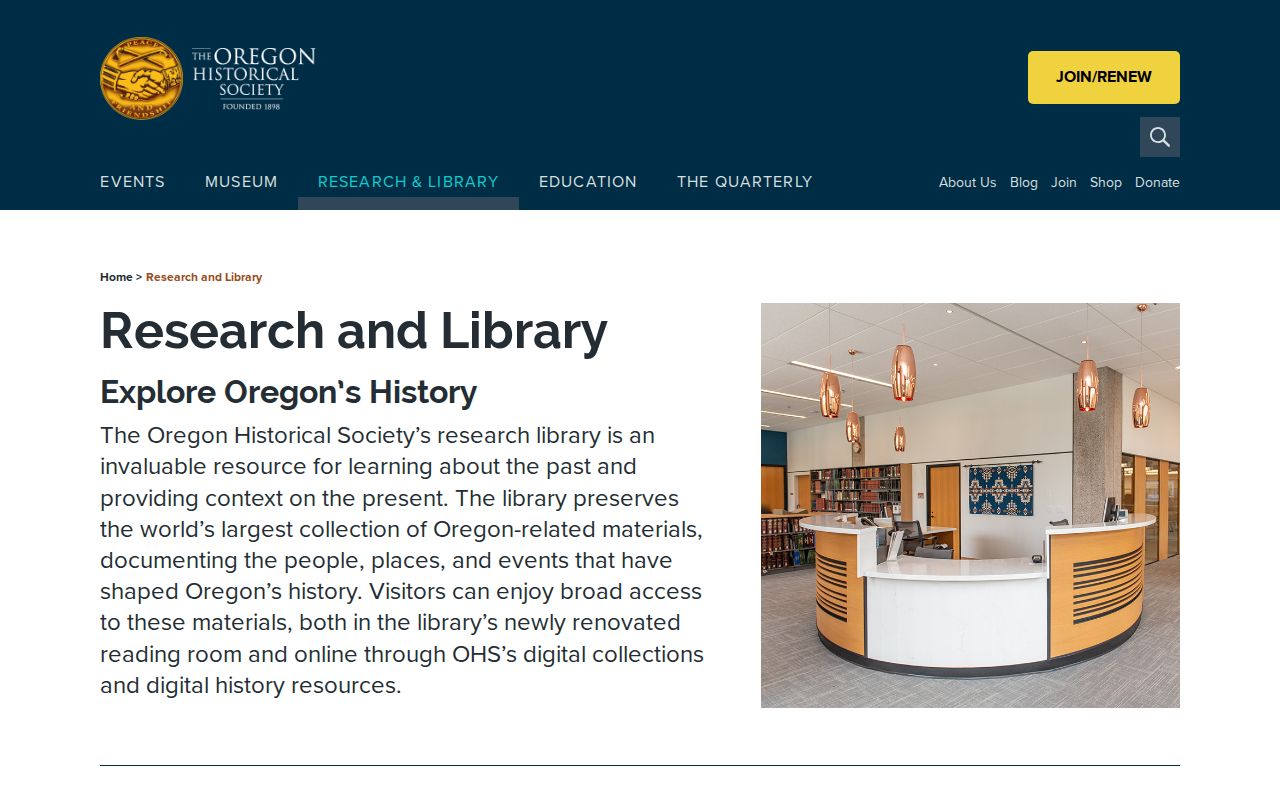
Its collections can help place a directory result in a broader Portland family or community history without treating the directory alone as final proof.
Portland Directory Research Rooms
Central Library and City Archives serve different parts of a Portland history question. The library's local-history service holds the directory and house-history path. City Archives holds municipal materials from Portland's 1851 founding, including council records, correspondence, reports, maps, plans, photographs, and community material. Its eFiles search can be narrowed by Electronic, Archival, Photographs, Council Documents, record date, number, and type, but a search result is a discovery lead rather than an assurance that an authoritative copy is available.
Portland State University Special Collections and University Archives offers another research channel for university and grassroots community-organization archives, rare books, photographs, and audiovisual material. Its records can add context for alumni or organization history, not a current personal directory.
When a Portland city directory clue points to a school, organization, or community event, repository staff and catalog descriptions are a better next step than speculative matching.
Library databases add two more dated layers to the Portland city-directory trail. Historical Oregonian covers 1861 through 1987, and Oregon Journal covers 1902 through 1982. Both can support a quoted address search for an obituary, advertisement, or local-news mention. A newspaper hit should keep its publication date beside the directory edition, especially when a surname or street spelling changes. That careful pairing gives a household history a time check that a single printed volume cannot provide.
The Oregon Historical Society Research Library is another Oregon-focused option, with a catalog, digital collections, Archives West, and research guides. Its reported reference contact is libreference@ohs.org and 503-306-5240. Use a catalog or staff inquiry to identify a collection before assuming a name or place is represented in a particular record group.